

4-minute read
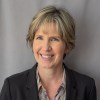
Laura Putnam, 42, didn’t plan to stay in Lakeland this long.
She came to the Polk Museum of Art at Florida Southern College in 2013 with a painter’s eye and an arts administrator’s degree, figuring she’d be here three to five years before heading back to the Northeast.
Thirteen years later, the museum has been expanded and renamed The Ashley Gibson Barnett Museum of Art, and Putnam is curator of exhibitions.
“I think that part of what has kept me here is the opportunity to grow alongside the institution,” Putnam said. “Over the years, the museum has expanded physically, programmatically, and in its ambitions, and I’ve been fortunate to evolve with it.”
Putnam earned a Bachelor of Fine Arts in Painting from the Rhode Island School of Design before pivoting to a Master of Science in Arts Administration at Boston University. She said the studio background never really left her.
“What I appreciate most about having a studio art background is that it allows me to understand where artists are coming from because I’ve been there myself,” she said. “While I am no longer a regular painter, I still think visually. In many ways, the exhibition itself becomes the medium.”
Putnam stepped up
When former Executive Director and Chief Curator Alex Rich departed, Putnam stepped in, then serving as manager of exhibitions and adult programs, and kept the exhibition program running through the transition.
By the time the title was official, it felt more like an acknowledgment than a promotion.
“It strengthened my understanding of both the opportunities and responsibilities that came from the position,” she said.
“One of the most important lessons I learned from working with Alex is that successful exhibitions are the result of strong relationships and coordination across all departments. Everyone from senior leadership down to our volunteer docents plays an integral role.”
AGB Executive Director Daryl Ward said the decision to make Putnam’s position official wasn’t difficult. Rich, when consulted, offered enthusiastic support.
From concept to completion
Putnam has curated a range of exhibitions during her tenure, including “Darkroom Alchemy: Photographs by Jerry Uelsmann,” “Surreal Scenarios: The Art of Susanne Schuenke,” and “The Medici Dynasty: Renaissance in Florence.”
But a 2019 show called “Sun + Light” by artist Charles Edward Williams is the one that still sticks with her.
It was the first exhibition she owned completely — from concept to completion. A Florida Humanities Council grant supported a public program featuring Williams alongside historian and author Raymond Arsenault and two civil rights Freedom Riders, Kredelle Petway and Rev. Bernard Lafayette Jr.
“Seeing a contemporary artist reflect on pivotal moments in American history through the lens of a young Black artist while sitting alongside individuals who had actually lived that history was incredibly powerful,” Putnam said.
“Dr. Lafayette even sang some of the freedom songs he wrote and performed while imprisoned in Jackson, Mississippi. I still get goosebumps every time I think about him singing ‘Buses Are A-Comin’ to a packed museum auditorium.”
For Putnam, it captured what she wants every exhibition to do: give people a reason to slow down and keep thinking after they leave.
More room, more possiblity
In January 2025, the AGB opened the new Dr. Anne B. Kerr Wing, adding 14,000 square feet of exhibition and education space, including six new galleries, to what is already the only Smithsonian Affiliate art museum in Central Florida and the largest accredited visual arts organization in Polk County.
For a curator, that’s not just more room. It’s more possibility. “We are no longer constrained to a single dominant exhibition model,” Putnam said. “There are more opportunities than ever to think ambitiously about the kinds of projects we can present.”
She also teaches art history and museum studies at Florida Southern College as an adjunct professor. Putnam said the classroom shapes how she approaches the public-facing side of her work, including the wall text visitors often skip.
“I’ve learned over the years that my students are more likely to engage thoughtfully with the material if there is less of it,” she said. “The same goes for gallery labels. You have to be more strategic and thoughtful about what you choose to say — or not say — but it invites more curiosity rather than intimidation.”
One thing Putnam hasn’t had the chance to pursue yet is a fully immersive contemporary installation, something site-specific to the AGB. She has a clear sense of where she wants to take the program and a clear measure for whether it’s working.
“I would consider my contribution as a success if the museum is stronger, more relevant, and more deeply connected to its community than when I arrived,” she said.
Editor’s note: This article was updated to include Putnam’s age.


latest news


Something went wrong. Please refresh the page and/or try again.